




和仲树一起重读阿伦特:《人的境况》读书会

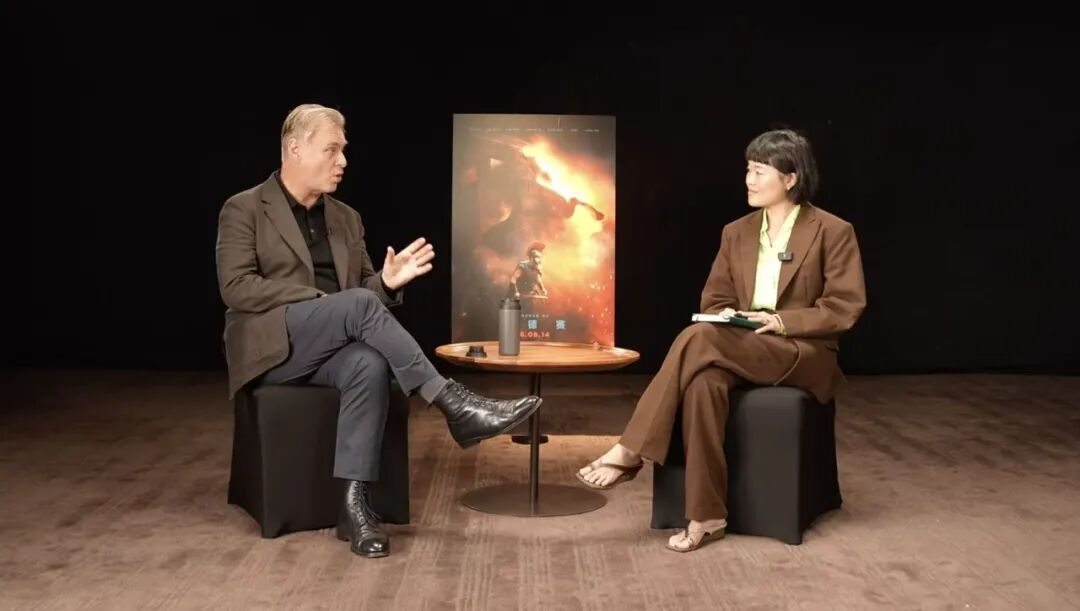
Zhong Shu
Hello, Mr. Nolan.
仲树:
你好,诺兰先生。
Christopher Nolan
Hello.
Zhong Shu
Nice to meet you.
克里斯托弗·诺兰:
你好.
仲树:
很高兴见到你。
Zhong Shu
Well, filmmakers are bards of the modern age. Just as the Greeks knew of Odysseus, Achilles, and Agamemnon because of Homer's narratives, we know of Batman, the Joker, and Oppenheimer because of your narratives.
Homer tells stories of the distant past, and you too. The Trojan War happened between the twelfth and eleventh centuries BC, but Homer lived in the eighth century BC, so that was a long time ago. Yet Homer's time was a time of rise. It was a time of civilizational rise. The Greeks were prospering as a culture. The economy, the books, the thinking—everything was on the rise for a couple hundred years, really until the fifth century BC.
So Homer's tone was celebratory. It was victorious. He celebrates the victory of the war, and your tone is emphatically not. So I guess my first question is: does that say something about our age? Are you a bard for a civilization at dusk?
仲树:
电影导演是现代社会的吟游诗人。正如每一个古希腊人都因为荷马的叙事而知道谁是奥德修斯、阿喀琉斯和阿伽门农,生活在现代的我们也通过你的叙事认识了蝙蝠侠、小丑和奥本海默。
荷马讲述遥远过去的故事,你也是如此。
特洛伊战争发生在公元前十二至十一世纪之间,而荷马生活在公元前八世纪,距离战争已经过去了很久。不过,荷马所处的时代是一个上升的时代,一个文明蒸蒸日上的时代。希腊文化正在走向繁荣,经济、书籍、思想,一切都在向上发展。这一上升过程持续了几百年,实际上一直延续到公元前五世纪。
因此,荷马的基调是赞颂性的,也是胜利的。他歌颂战争的胜利,而你的基调显然并非如此。所以我的第一个问题是:这种差异是否说明了我们这个时代的某些特征?你是否是一位为迟暮文明歌唱的吟游诗人?
Christopher Nolan
I think that's a really interesting point, a really interesting question. I mean, the main point is this 400-year-or-so gap between the events that Homer is describing and when Homer's story was written down, or first received by readers and audiences. That's a pretty interesting gap.
For me, I don't think I'm completely at odds with the way Homer is telling the story when you look at it from a sort of historical perspective. The reason—and what I became interested in as I adapted it—is that Homer is writing about an era before his. He's writing about an era hundreds of years earlier that his audience viewed as being more advanced than theirs.
So they were a civilization on the rise, but they were trying to get back to where they'd been 400 years before. That idea of a cycle, that idea of, as you say, a civilization at dusk—I think it's there in the past. It's subtle, but when you look at the history as well, when you look at the idea that when they would unearth these walls of old palaces that had crumbled, they called them Cyclopean walls because they thought only a giant could have built such grand walls. They had this idea of the greatness of this past civilization.
And so I became interested in that collapse, what they call the catastrophe—the Bronze Age collapse—and what happens between the events of the Trojan War and Homer. And so, yes, I think it's something that, from a modern perspective, is interesting. It's frightening and interesting and intriguing.
I think, for me, it partly comes out of having worked on Oppenheimer, which is very much a film about the end of the world—about the collapse of civilization, ultimately. So I think, yes, I definitely carried that sensibility into this adaptation of The Odyssey.
克里斯托弗·诺兰:
我认为这是一个非常有意思的观察,也是一个非常有意思的问题。这里的关键在于,荷马所描述的事件与荷马的故事最终被记录下来,或者最初被读者和听众接受,之间存在大约四百年的间隔。这是一段非常耐人寻味的距离。
在我看来,如果从历史角度观察,我的讲述方式并不完全有悖于荷马。原因在于,这也是我在改编过程中逐渐产生兴趣的地方,荷马本来就在书写一个早于自己的时代。他书写的是几百年前的时代,而他的听众认为,那个时代比他们自己所处的时代更加先进。
所以,他们的文明虽然正在上升,却也在试图重新回到四百年前曾经抵达的高度。这种循环的观念,这种正如你所说的“文明的黄昏”,我认为在古代本身便已经存在了。它表现得很微妙,但如果观察那段历史,就会发现:当时的人们发掘出古代宫殿坍塌后留下的城墙,会把它们称作“独眼巨人之墙”,因为他们相信,只有巨人才能建造如此宏伟的城墙。他们对于过去那个文明的伟大,有着非常清晰的意识。
因此,我开始对那场崩溃产生兴趣,也就是人们所说的“大灾变”,青铜时代的崩溃,以及特洛伊战争与荷马之间的几个世纪究竟发生了什么。从现代人的角度看,这个问题确实非常有意思。它既令人恐惧,又令人着迷,也激起人的好奇。
对我而言,这种感受也有一部分来自我拍摄《奥本海默》的经历。《奥本海默》在很大程度上是一部关于世界末日的电影。归根结底,它讲的是文明的崩溃。所以,是的,我确实把这种感受带入了对《奥德赛》的改编。
Zhong Shu
One thing that captured me was that the concept of atonement doesn't exist in Greek culture. It doesn't exist in the Greek language. It doesn't exist in Homer's Odyssey. It exists in your Odyssey.
So I guess a natural question that I had when watching the film was: did you Christianize The Odyssey? Why did atonement become important with the coming of catastrophe?
仲树:
观影时有一点深深吸引了我:古希腊文化中并不存在“赎罪”这一概念。古希腊语中不存在赎罪这个词,荷马的《奥德赛》中没有赎罪,但是你的《奥德赛》中却有。
所以,我在观看电影时自然而然地产生了一个问题:你是否把《奥德赛》基督教化了?当灾难降临之际,为什么赎罪变得如此重要?
Christopher Nolan
I think it's a really good question. I wasn't too conscious in how I was approaching it philosophically, other than that I really honed in on the idea of what's termed xenia. In the film, we call it Zeus's law for simplicity.
But it's that idea of mutual respect: that I treat you the way I want to be treated. In their theology, it's because you might be a god in disguise. So I really drilled down on that, and I started to realize that, for me, a lot of what's interesting about the interaction of history and mythology is this idea of the Sea Peoples—the people from the sea who were thought to have precipitated the Bronze Age collapse. It's one of the great mysteries of history: who were they?
The idea that, really, a violation of xenia, a violation of Zeus's law—which is what the suitors are doing in the palace—is causing this difficulty, this damage.
I think the idea of atonement, in a way, is what we bring as viewers to the story. I don't know whether there really is atonement in the film, or whether we just feel that that's the catharsis, or that's the process we're seeing in the final meeting that we've waited for between Odysseus and Penelope. But I think, in a way, we may be bringing our more modern sensibility to that.
It's a very interesting question. Insofar as it's there, it's not a deliberate attempt to, for example, Christianize it. It's an outgrowth, or a natural conclusion, of burrowing in on this philosophical idea of what happens when you break Zeus's law.
克里斯托弗·诺兰:
这是一个非常好的问题。我当时并没有特别自觉地从哲学上规定自己应该如何处理这个问题。我唯一非常明确的做法,是把注意力集中在希腊人所谓的“宾客之谊”(xenia)上。为了简化表达,我们在电影中把它称作“宙斯的律法”。
它讲的是一种相互尊重:我按照自己希望被对待的方式来对待你。在古希腊人的神学观念中,人们必须这样做,因为站在你面前的陌生人可能是一位乔装而来的神。我不断深入挖掘这个观念,随后开始意识到,对我而言,历史与神话之间的相互作用之所以迷人,很大程度上也与“海上民族”有关——这些来自海上的人,被认为曾经促成了青铜时代的崩溃。他们究竟是谁?这是历史上最大的谜团之一。
我逐渐形成的想法是:对宾客之谊的破坏,也就是对宙斯律法的破坏——宫殿中的那些求婚者所做的正是这件事——造成了后来的一切困境和损害。
从某种意义上说,“赎罪”或许是我们作为现代观众带入这个故事的观念。我不知道电影中是否真的存在赎罪,还是我们只是把自己感受到的东西理解成了一种净化,或者把奥德修斯与佩涅洛佩那场观众期待已久的最终重逢,理解成了一个赎罪的过程。从这个意义上说,或许是我们将一种更加现代的感受带入了故事。
这是个很有意思的问题。即便电影中确实存在赎罪,它也不是我有意将《奥德赛》基督教化的结果。它更像是我深入追问一个哲学问题之后自然生长出来的结果,或者说自然得出的结论:当一个人破坏了宙斯的律法,究竟会发生什么?
Zhong Shu
I guess, from what you're saying, the connection between atonement—which is the perspective of a Christian world—and xenia, which is the perspective inherent in the Greek world, is that what connects them is the fact of war. What is the response to war?
You still want to say that the presentation is inherent in the Greek mythological worldview: that war happened when hospitality, or xenia, was broken.
仲树:
那么,根据你的说法,赎罪与宾客之谊之间的联系——前者来自基督教世界的视角,后者则内在于古希腊人的世界——或许就在于战争这个事实,以及人应该如何回应战争。
不过,你依然希望说明,这种解释本身就存在于希腊神话的世界观之中:战争之所以发生,是因为待客之道,也就是宾客之谊,遭到了破坏。
Christopher Nolan
I think so. Sometimes it's difficult to draw a line. I think academics are often perhaps too dogmatic in drawing a line between different philosophies as they evolve historically, because I think I was more interested in commonalities.
One of the things I found is that once you ignore the theological underpinning of xenia, what you realize is that it is what we, in modern terms, call the Golden Rule. This idea of treating others as you would be treated has never really changed over time. The reasons that we try to hold people to that might have changed, but the idea itself hasn't changed.
What I came to think is that what the poem, to me, is saying—or inspiring in me—is the idea that civilization depends on this rule, and possibly is even defined by it. To me, that was a really interesting thing to realize. This ancient text, to me, speaks directly to the modern world because I think we live in a world where the concept of xenia, the concept of mutual respect, is more challenged than it's ever been, in more obvious ways than ever. I think we see the negative effects of that in terms of what defines civilization and what binds us together.
克里斯托弗·诺兰:
我想是的。有时候,我们很难在这些观念之间划出一条清楚的界线。我觉得,面对不同哲学观念在历史中的演变,学者有时可能过于执着于划定它们之间的界线,而我更感兴趣的是它们之间的共同之处。
我发现,一旦暂时撇开宾客之谊背后的神学基础,你就会意识到,它其实就是我们今天所说的“黄金法则”。也就是:按照自己希望被对待的方式去对待他人。这条原则从来没有真正随着时间发生改变。我们要求人们遵守它的理由或许发生了变化,但这个观念本身没有改变。
我逐渐认为,这首史诗对我所说的——或者说它在我心中激发出来的——正是这样一种观念:文明依赖这条法则而存在,甚至可以说,文明本身就是由这条法则定义的。意识到这一点,对我来说非常有意思。
在我看来,这部古老的文本直接对现代世界说话。因为我们生活在这样一个世界里:宾客之谊的观念、人与人相互尊重的观念,正遭受前所未有的挑战,而且这些挑战比过去任何时候都更加显而易见。我认为,我们已经能够看到它所造成的负面后果——它动摇了文明的定义,也动摇了把我们维系在一起的纽带。
Zhong Shu
Right. Here's another Greek concept that is challenged in our world: hubris.
You've already started to complain about academics, and I feel like the next question will expose me even more. There's another great book written by another great man, Thucydides' Peloponnesian War, which also has a central theme concerning the hubris of the Athenians. He blamed the fall of the greatest civilization in the world, Athenian democracy, on the hubris of the Athenians.
Your film centers on the hubris of one man, the human pride of one specific man. My question is: should Odysseus repent for his human pride? Maybe pride is appropriate for a great man?
仲树:
是的。还有一个古希腊观念,在我们的世界里同样正受到挑战,那就是“傲慢”(hubris)。
你刚才已经开始抱怨学者了,我感觉接下来的问题会更加暴露我的学究气。有另一位伟大作者写了一部伟大的著作——修昔底德的《伯罗奔尼撒战争史》。这部作品的核心主题之一,同样是雅典人的傲慢(hubris)。修昔底德把当时世界上最伟大的文明——雅典民主——的衰落归咎于雅典人的傲慢。
而你的电影聚焦于一个人的傲慢,一位具体人物的骄傲。我的问题是:奥德修斯是否应该为这种骄傲悔过?又或许,骄傲本来就配得上一位伟大人物?
Christopher Nolan
I mean, I suppose the question could be asked: what difference would it make if he repented?
That's the interesting thing about these philosophical approaches. His repentance would be purely internal. It would be purely for his own spiritual self. It wouldn't necessarily affect anything outside of him, because the damage is done. Xenia is broken, maybe for all time.
That's the interesting thing. I think that is the thing about hubris. It's tragic because it's irreversible, essentially. That's where Christian theology looks at it in a different way, but in a practical sense it doesn't necessarily change what's happened and therefore, in storytelling terms, isn't necessarily relevant.
That's what I say: we bring our understanding to it. So we feel that there's catharsis because there's confession, because there's honesty and intimacy between Odysseus and Penelope. That was very important to me, and I'm very invested in that emotionally.
But if it has no practical effect, and the collapse is coming anyway—the catastrophe is coming—what difference does it make for your events? That's the interesting thing. Are we concerned with his spiritual well-being, or are we concerned with the world that he lives in and the world that, in some sense, he feels he's damaged?
克里斯托弗·诺兰:
我想,我们也可以反过来问:即使他悔过了,又会有什么不同?
这些哲学路径最有意思的地方正在于此。他的悔过完全发生在内心,只关系到他自己的精神状态,并不一定会影响他之外的任何事物,因为伤害已经造成了。宾客之谊已经遭到破坏,也许是永远遭到了破坏。
这正是其中耐人寻味的地方。我认为,傲慢的本质也正在这里:它之所以具有悲剧性,归根结底就在于它不可逆转。基督教神学会从不同的角度看待这个问题,但是从实际意义上说,忏悔并不一定能够改变已经发生的事情。因此,从叙事的角度看,它也未必与故事真正相关。
这也正是我刚才说的:我们会把自己的理解带入故事。所以我们感受到了一种净化,因为奥德修斯作出了坦白,因为奥德修斯与佩涅洛佩之间终于有了诚实而亲密的交流。这一点对我非常重要,我在情感上也非常投入。
但是,如果他的忏悔无法产生任何实际影响,如果崩溃无论如何都会到来——大灾变终究会降临——那么对事件本身而言,他是否悔过又有什么区别?有意思的地方就在这里:我们究竟关心的是他个人的精神安宁,还是他生活的那个世界——那个在某种意义上被他自己认为已经遭到他破坏的世界?
Zhong Shu
We live in an age that demands apologies from greatness. Great storytellers, when they portray greatness—Homer celebrates it. We circle around it, we dance around it, or we turn greatness into privilege, and we demand apologies for it. That's a fact of Hollywood.
I'm just wondering: as one of the greatest storytellers of our age, how do you approach greatness? Is it still a story of apology that demands repentance, reflection, and self-criticism?
仲树:
我们生活在一个要求伟大为自身道歉的时代。伟大的叙事者描绘伟大时——荷马会直接歌颂它。而我们却只能围着它打转,与它周旋,或者把伟大转化成某种特权,然后要求它为自身道歉。这是好莱坞的现实。
所以我很好奇:作为我们这个时代最伟大的叙事者之一,你如何面对“伟大”?关于伟大的故事,是否依然必须是一则道歉的故事,必须要求主人公忏悔、反思和自我批判?
Christopher Nolan
Well, I think that when you're talking about storytelling, you're always in conversation with the expectations of the audience. So it really is an energy that's brought from the audience, as well as an energy that's put forward from the story itself.
When you're characterizing somebody, the trite version of this—or the criticism leveled at movies in general—is: “Oh, the character has to be made sympathetic, so the character is manipulated in different ways and changed in different ways.”
That's a fundamental flaw of film criticism, in a way, or storytelling criticism, because being able to identify the mechanism does not invalidate the mechanism. That's a real problem in criticism today, because people have this idea that because I can understand why the story affects me the way it does, therefore it didn't work. That's not how storytelling works.
And so, when we create a heroic figure in a story, as storytellers, we have to be mindful of the energy that the audience brings to that story, and the interaction between our intention and the way the audience receives that. The fact that the mechanism is identifiable to people doesn't invalidate it.
Part of that mechanism is asking: are we going to treat greatness as an absolute? Or, coming from a democratic, more idealized philosophical state that we live in in today's world, where we want to view people as equal, do we have to apologize for that greatness?
The answer is yes, we do, or the audience rejects the greatness. That is part of the mechanism. Once again, the fact that the mechanism is identifiable doesn't mean that it's invalid or shouldn't be used.
For me—as we talk about it—none of these are things that I try to be conscious or self-conscious of when I'm writing. But as we talk about it, we of course realize that my attempt to do that is to retain it within the philosophical surroundings of the breaking of xenia that I found interesting in the story.
So I'm trying to be true to the thematics of the story as they create the character that the audience can invest in and can feel satisfied with.
克里斯托弗·诺兰:
我想,当我们谈论叙事时,创作者始终都在与观众的期待对话。因此,故事中真正发生作用的,既有观众带进来的能量,也有故事本身释放出来的能量。
在塑造人物时,人们经常会提出一种已经有些陈腐的说法——或者说,这是一种经常针对电影提出的批评:“哦,为了让观众同情这个角色,创作者就必须用各种方式操纵和改造这个人物。”
从某种意义上说,这是电影批评或者叙事批评中的一个根本缺陷。因为一个人能够辨认出某种机制,并不意味着这种机制就此失效。这是当今批评中的一个真正问题:人们以为,既然我能够理解这个故事为什么以这种方式打动我,那么它实际上就没有成功。这并不是叙事运作的方式。
所以,当我们这些叙事者在故事中创造一位英雄人物时,就必须留意观众带入故事的能量,也必须留意创作者的意图与观众的接受方式之间如何相互作用。人们能够辨认出其中的机制,并不会使这套机制失效。
这套机制的一部分就在于提出这样的问题:我们是否准备把伟大当作一种绝对的东西?或者说,站在我们今天所处的这个更加民主化、也更加理想主义化的哲学状态中——在这样一个希望把所有人都视为平等的世界里——我们是否必须为伟大道歉?
答案是肯定的。我们必须这样做,否则观众就会拒绝接受这种伟大。这是叙事机制的一部分。我要再次强调:这套机制可以被识别,并不意味着它已经无效,也不意味着我们不应该使用它。
就我个人而言——也是在我们此刻谈论这些问题时——这些并不是我在写作时会刻意意识到,或者会不断进行自我审视的事情。但是通过我们的讨论,我们当然可以意识到,我处理这个问题的方式,是把它保留在故事中那个令我着迷的哲学语境之内,也就是宾客之谊遭到破坏之后所形成的哲学语境。
因此,我试图忠于故事本身的主题,同时塑造出一个观众能够投入情感,并最终从中获得满足的人物。
Zhong Shu
As you were speaking—first of all, I like how you dragged film critics into the water, as well as academics.
But I just realized filmmakers, in a way, have it much harder than poets, because poems can only be read in the language and culture in which they are written. You can't really read Shakespeare outside English, or Goethe outside German. But filmmakers have to speak to audiences outside of their polis: people who don't speak their language. And you come to a place with people of different nomos, of different customs. Do you put them into consideration?
仲树:
听你说到这里——首先,我很喜欢你把电影批评家也拖下了水,跟学者们一起。
不过,我刚刚突然意识到,从某种意义上说,电影导演的处境比诗人艰难得多。因为诗歌只能在它诞生的语言和文化中得到真正的阅读。离开英语,人们很难真正阅读莎士比亚;离开德语,人们也很难真正阅读歌德。
但是,电影导演必须向自己城邦(polis)之外的观众说话,必须面对那些不使用自己语言的人。你来到一个地方,这里的人拥有不同的习俗和规范(nomos)。你在创作时会把他们考虑在内吗?
Christopher Nolan
No, but the interesting thing about film—and when I was talking about film criticism, I was talking more about amateur film criticism than professional film criticism, because professional film criticism tends to understand the necessity for the mechanisms—is that you're looking at a lingua franca of storytelling created by Hollywood over the last hundred years that is very effectively universal.
And so it is its own language. That language is understood by people all over the world, which is what's incredible about it. It is a very, very accessible modern language of storytelling, and it has certain rules. It has conventions.
You can break those conventions. You can bend them. You can move them. But you have to be aware of them the whole time.
As I say, I'm thinking more of amateur criticism, because they feel they've identified the mechanism; they feel that invalidates it. That can be true of certain elements, and film grammar, film language, evolves with that. So when a trope becomes too familiar to an audience, then it has to be changed.
But we do, as filmmakers, avail ourselves of that common language. We build on that understanding. Our audience has seen many films, and they understand that language. And so you're playing with that language. It's the language of genre. It's the language of audience sympathy. It's the language of clarity, of narrative direction, and how you guide people through a story.
克里斯托弗·诺兰:
不会。不过,电影最有意思的地方也正在这里——顺便说明一下,刚才谈到电影批评时,我主要指的是业余电影批评,而非专业电影批评,因为专业影评人通常理解这些叙事机制的必要性——过去一百年间,好莱坞创造出了一套叙事的通用语,而这套语言已经非常有效地成为了一种世界性语言。
因此,电影本身就是一种语言。世界各地的人都能够理解这种语言,这一点非常不可思议。它是一种极其易于理解的现代叙事语言,也拥有自己特定的规则和惯例。
你可以打破这些惯例,可以弯折它们,可以移动它们,但你必须时刻意识到它们的存在。
正如我刚才所说,我想到的更多是业余批评者。他们认为自己识破了某种机制,于是就觉得这种机制失效了。对于某些具体元素来说,这种判断可能成立,而电影的语法和语言也会随之演变。因此,当某个叙事套路对观众而言变得过于熟悉时,它就必须发生改变。
不过,作为电影导演,我们确实会利用这套共同语言,并在观众已有的理解之上继续建构。我们的观众看过许多电影,他们已经理解这套语言。因此,创作者实际上是在运用并把玩这套语言。它是类型的语言,是引导观众产生同情的语言,也是确保叙事清晰、指明故事方向,以及引导观众穿行于故事之中的语言。
Zhong Shu
You're talking about a relationship between tradition and innovation. Because at some point, the mechanism becomes trite or unusable. But without the mechanism, you can't really—
仲树:
你谈到的其实是传统与创新之间的关系。因为到了一定的时候,某种机制会变得陈腐,甚至不再可用;但如果完全没有这些机制,你又不可能真正——
Christopher Nolan
Exactly. You can't completely have a tabula rasa. You can't throw everything away. You have to make your choices in terms of: how am I arranging the story?
For example, one of my first films, Memento, was a story that I structured in reverse chronology. But what I retained was a very, very clear and simple three-act structure. So the structure of the film, as it's received by the audience, is very, very conventional, but the chronology is unconventional.
And so those are the choices you make. That's one example where you say, “OK, I need this to be extremely familiar underneath so that I can change what's on the surface.” That's a continual mechanism that's evolving and that you're working with the whole time.
克里斯托弗·诺兰:
没错。你不可能彻底从一块白板(tabula rasa)开始,也不可能把一切全部抛弃。你必须作出选择:我要如何安排这个故事?
例如,我早期的一部电影《记忆碎片》,采用了逆向时间顺序来组织故事。不过,我依然保留了一个非常清晰、非常简单的三幕式结构。因此,观众实际接收到的电影结构非常传统,但它的时间顺序却并不传统。
创作者需要作出的就是这样的选择。你会告诉自己:“好,我需要让底层结构显得极其熟悉,这样我才能改变表层呈现出来的东西。”这种机制始终处于演变之中,也是创作者在整个过程中不断加以运用和调整的东西。
Zhong Shu
I'm again thinking like a nerdy doctoral student who has to write a dissertation. Writing on Plato or Aristotle is the most difficult thing to do. Just like making a film on The Odyssey: it's been done for thousands of years. When you're making Memento, you can make it whatever you want. Nobody knows the character, so they won't have a complaint about your adaptive choices.
And I'm curious: you've said before that after Oppenheimer, with the success of Oppenheimer, you felt like you had a kind of liberty to do whatever you wanted, or actualize what you wanted to do. And you chose the most difficult dissertation to write, if you're getting a PhD.
仲树:
我又开始像一个埋头写论文的书呆子博士生那样思考了。研究柏拉图或亚里士多德,是最困难的论文选题。拍摄《奥德赛》也是如此,因为人们已经讲述、阐释和改编这个故事几千年了。可是,当你拍摄《记忆碎片》时,你可以随心所欲地处理它。没有人预先认识这些人物,因此也不会对你的改编选择提出异议。
所以我很好奇:你此前曾经说过,《奥本海默》取得成功之后,你感到自己获得了某种自由,可以做任何自己想做的事情,或者把自己真正想做的东西变成现实。可是,如果把它比作攻读博士学位,你最终却选择了那篇最难写的博士论文。
Christopher Nolan
I mean, in some ways. But in other ways, there's something I do think your question is slightly missing, which is that when you make Memento, yes, it's a character I've created and people won't criticize it on that basis, but it's in a tradition of noirish, amnesia-based noir fiction. And people judge it by those terms.
So even though, on the surface of things, nominally, a film is a different or original creation, the audience and critics tend to judge it in relation to previous examples of the genre, which is an advantage and a disadvantage.
Yes, when you adapt Batman, for example, there are a lot of people who are going to say, “Well, hang on—why is it this way? Why is it that way?” and everything else. But even with an original story, it's the same thing. It's like: “Well, hang on—why haven't you used the protagonist in this way? Why has this character done this? Why have they done that?”
They're judging it relative to the overall cultural flow of the movement of cinema and the conventions of cinema. As I say, it's not a complaint. It's just something you have to be aware of as a filmmaker. It's an advantage and it's a disadvantage.
克里斯托弗·诺兰:
从某些方面来说,确实如此。不过,从另一些方面来说,我觉得你的问题略微忽略了一点:当我拍摄《记忆碎片》时,没错,电影中的人物由我创造,所以人们不会从“是否忠于原作人物”这个角度批评它。然而,它依然属于一种黑色电影传统,更具体地说,是以失忆为主题的黑色类型叙事。人们仍然会按照这套标准来评判它。
所以,即便从表面上看,或者从名义上看,一部电影是全新的原创作品,观众和批评者仍然倾向于把它与此前的同类型作品联系起来加以评价。这既是一种优势,也是一种劣势。
的确,当你改编蝙蝠侠时,会有很多人说:“等一下,为什么这里要这样处理?那里又为什么要那样处理?”诸如此类。但是,即使面对一个原创故事,情况仍然相同。人们会问:“等一下,你为什么没有用这种方式处理主人公?这个人物为什么要这样做?他们为什么又要那样做?”
他们是在电影发展的整体文化脉络和电影惯例之中评价作品。正如我刚才所说,这并不是抱怨。它只是电影导演必须始终意识到的事情。它既是优势,也是劣势。
Zhong Shu
Yes. With The Odyssey, you've dragged the classicists, too, as hounds behind your back.
I guess a final question for me: what are the gods? Are they figments of imagination, or are they necessary noble lies?
仲树:
是的。而拍摄《奥德赛》,又让你招来了一群古典学家,像猎犬一样紧紧追在你的身后。
那么,我最后想问的问题是:诸神究竟是什么?他们是想象的产物,还是某种必不可少的“高贵谎言”?
Christopher Nolan
They are—to the characters in the story—they are reality.
What I found interesting about looking at the idea of gods, and how to address it, was approaching this from the point of view of people who would have lived at that time, for whom, in a pre-scientific era, evidence of divinity was everywhere.
And so the existence of gods is not an article of faith. It's simple reality. Thunder and lightning are God speaking to them. The state of the ocean is moved by the gods. They have no other explanation for it.
Just as we accept things from science as absolute fact—you know, the Earth is round and we travel around the Sun—we can't know these things; we take them on faith because they're presented as facts. The same would be true of the theological structure that explains nature to people of that time.
And so, for me, the gods are real, but they are inside the people. They are being projected by the people.
克里斯托弗·诺兰:
对于故事中的人物而言,诸神就是现实。
在思考诸神这一观念以及应该如何处理它时,我感兴趣的是站在那个时代的人的立场上看待这个问题。对于生活在科学出现以前的人来说,神性存在的证据遍布四周。
因此,诸神的存在并不是一项有待相信的信条,而是简单而直接的现实。雷鸣与闪电意味着神正在对他们说话,海洋的状态由诸神推动和改变。除此之外,他们没有其他解释。
这就像我们会把科学告诉我们的事情当作绝对事实——例如地球是圆的,地球围绕太阳运行。我们自己其实无法直接知道这些事情;我们之所以相信,是因为它们被作为事实呈现在我们面前。对于那个时代的人来说,用以解释自然的神学结构也是如此。
所以,对我而言,诸神是真实的,但他们存在于人的内部。他们由人投射出来。
Zhong Shu
Oh, that's cool. Just like superheroes for the moderns.
仲树:
哦,好吧。就像超级英雄之于现代人。
Christopher Nolan
Yes, in a way.
克里斯托弗·诺兰:
是的,从某种意义上说。
Zhong Shu
Thank you very much, Mr. Nolan.
仲树:
非常感谢你,诺兰先生。
Christopher Nolan
Thank you.
克里斯托弗·诺兰:
谢谢。
2026.08.04